
Reading: From Word-by-word Translation to Claims and Evidence
Source (中文): 阅读篇
Reading is not moving every word into another language. It is building meaning, structure, and judgment while some uncertainty remains. You need to know when to continue, when to verify, and when to separate the author’s claim from your own opinion.
Quick Overview
- use intensive reading for structure, evidence, and tone, and extensive reading for speed, stamina, and interest;
- choose material that is slightly challenging but finishable;
- recommend books by reading task, not by sales or ranking claims;
- leave a gist, structure, supported inference, and retelling after each session.
Choose Material by Task
Reading material is not more valuable simply because it is harder. Name the task first, then choose a main source you can finish in the available time and a parallel source on a related topic. The main source trains the method; the parallel source checks transfer.
| Task | Material condition | Evidence of completion |
|---|---|---|
| Locate information | A notice, instruction, short report, or document with a clear question | Mark the answer in the source and state the supporting line |
| Follow an argument | A structured comment, report, or technical explanation | Map claim, reasons, evidence, and limitations |
| Build stamina | A novel, biography, or long nonfiction text you will read for seven days | Keep reading time, chapter gist, and one delayed retelling |
| Synthesise sources | 2–3 texts on one topic with different authors or positions | Write a one-page comparison separating fact, inference, and judgment |
Keep the chosen source for at least seven days before replacing it. Record author, title, edition or publication date, access date, length, and usage boundary; web pages can change, become paid, or disappear. These links are entry points, not rankings, sponsorships, or promises of permanent availability. Copy the Reading Evidence Card to preserve evidence from each session.
Intensive vs. Extensive Reading
Intensive reading
Short but dense writing is great for intensive reading—The Economist is a classic example.
If you skim an Economist-style article, you’ll only get the surface. The structure, subtext, and sharp opinions are where the value is.
Treat intensive reading like tasting: look things up, reread, and try to figure out why the author chose those words.
Extensive reading
Beautiful novels are perfect for extensive reading—Animal Farm, for example.
This is more about enjoyment. Sometimes the first few lines hook you so hard you can’t stop.
Don’t turn it into homework:
- no strict plan
- no rushing to “finish the book”
- go with your mood and enjoy it
Also: start with something manageable. Jumping straight into A Song of Ice and Fire is a fast way to get crushed by unknown words and quit.
A Complete Reading Pass
- First pass: finish a short section on a timer without looking up every word; write one-sentence gist.
- Mark: label each paragraph’s function and the words or sentences that truly block meaning.
- Verify: check recurring, domain-critical, or reasoning-critical items and record the source.
- Reconstruct: close the dictionary, rebuild the structure in five sentences, and write one supported inference.
- Transfer: read a parallel text one week later and compare speed, gist, and evidence tracking.
If almost every sentence is blocked, choose easier parallel material first. Lowering the entry point does not lower the destination.
Recommended English Books
Here are a few books across relative difficulty levels. The descriptions focus on reading practice rather than rankings, sales, or universal difficulty claims. Recheck the specific edition and availability before starting:
Animal Farm (动物庄园) — George Orwell
A compact allegorical story that works well for practising repeated vocabulary, narrative movement, and the relationship between claims and symbols.
The Curious Incident of the Dog in the Night-time — Mark Haddon
The distinctive first-person voice makes it useful for studying logical connectors, perspective, and how a narrator shapes evidence.
The Diary of a Young Girl — Anne Frank
The diary form offers practice in concrete detail, daily observation, and expressing changing emotion without a formal essay structure.
Harry Potter series (哈利波特系列) — J. K. Rowling
Popular fiction can be a practical bridge to long-form reading: dialogue, action, recurring vocabulary, and sustained plot all build stamina.
The Kite Runner (追风筝的人) — Khaled Hosseini
A longer, emotionally demanding narrative for practising pacing, relationships, and the way a story carries guilt, loyalty, and repair.
On Writing Well — William Zinsser
A clear nonfiction text for intensive reading: follow its structure, notice how sentences are shortened, and imitate one paragraph in your own words.
A Chinese translation can provide a background map, but do not compare sentence by sentence. Let the English text speak first, then compare changes in tone and emphasis.
WeChat Official Accounts
I rarely use WeChat, so the list below is a personal record of accounts I once read. It does not mean they are still active or suitable for every reader:
- 英文悦读
- 独霸上海的妖怪
If you suggest an account, include its reading task, last-checked date, and a public access path in the issue.
How to Read English Documentation
Do not use a mechanical “five unknown words means stop” rule. First decide whether the words block the main idea. Mark them on a fast first pass; on the second, look up recurring, domain-critical, or reasoning-critical items; then close the dictionary and reconstruct the structure. If almost every sentence is blocked, choose easier parallel material or learn the domain chunks first.
For technical terms, be extra careful:
- read definitions and examples
- if you still don’t get it, search for good explanations (including Chinese blogs when useful)
If you use tools to pre-extract unknown words from a document and learn them first, reading becomes much smoother.
Choose a device for sustainable reading: if a technical PDF is too small or cannot be searched, switch readers, enlarge the page, or find an HTML version. No single device is a universal answer.
Communities and Technical Articles
- Medium: find technology, design, or life writing by topic; check author, date, and citations first.
- Quora: use answers to practise separating personal experience, fact, and speculation; upvotes are not evidence.
- Reddit: observe informal language and community context; for health, legal, or financial claims, return to primary sources.
- Hacker News: practise reading technical headlines, comments, and linked sources; verify important claims in the original article.
- Stack Overflow: study the question, constraints, attempts, and accepted answer; test code against current documentation.
Reference Book
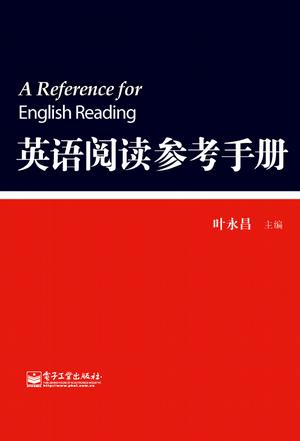
CEFR Task Goals
- A1–A2: understand short notices, instructions, messages, and direct familiar information.
- B1: identify main point, sequence, and main reasons in familiar articles.
- B2: understand arguments, evidence, and position in complex or specialist material.
- C1–C2: process long, stylistically varied, implicit material and synthesise sources.
Inspectable Practice and Feedback
Choose a challenging but finishable article. Time the first read and state the gist in one sentence; label each paragraph's function; reconstruct the argument in five sentences; write one supported inference and one counterexample; verify quotations last.
Score 0–2 for gist, structure, evidence, inference boundary, and delayed retelling. Unknown-word count is diagnostic, not a level judgment.
Seven Days, Thirty Days, Twelve Weeks
- Seven days: read four short texts on one topic; keep first summaries and a day-seven retelling.
- Thirty days: one annotated close read and two timed extensive reads weekly; compare speed and summary accuracy.
- Twelve weeks: move from one text to multi-source synthesis; finish with a cited report, technical review, or exam simulation.